
Best Sections for Adding a Granny Flat: Tauranga, Auckland & Christchurch Guide
- freedomcabinsnz

- Apr 27
- 5 min read

Not all sections are created equal when it comes to plonking a granny flat in the backyard.
With the 2026 consent-free rules making it easier than ever to add a cabin up to 70m² to your property, the question isn't just "Can I?" - it's "Should I?"
Your section's size, shape, slope, and services will determine whether adding a granny flat is a straightforward project or an expensive headache. Here's what you need to know for the three main regions we service.
What Makes a Section "Good" for a Granny Flat?
Before we dive into specific areas, here's what we're looking for:
Size Matters
Minimum 600m² section (though 700m²+ is ideal)
Enough space for the cabin plus required setbacks from boundaries
Room for vehicle access if you're planning to crane or truck it in
Relatively Flat
Gentle slopes are fine and can even add character
Steep sections mean earthworks, retaining walls, and $$$$
Flat sections keep foundation costs predictable
Services Access
Power connection within reasonable distance
Water main accessible
Wastewater either connected to council system or space for septic
Stormwater drainage that doesn't create flooding issues
Council Zoning
Residential zoning (not rural-residential with restrictions)
No heritage overlays or significant tree protections
Check for any special character zones with extra rules
Now let's get specific.
Tauranga & Bay of Plenty: Best Areas for Granny Flats

The Winners: Bethlehem, Pyes Pa, Papamoa
Bethlehem
Why it works:
Larger sections (many 700-1000m²), relatively flat, modern subdivisions with good infrastructure. Most homes built post-2000 with straightforward service connections.
Average section size: 750-900m² Typical cabin placement: Side or rear of section, easy vehicle access Watch out for: Some newer subdivisions have covenants restricting additional dwellings - check before you buy
Pyes Pa
Why it works:
Generous lifestyle blocks closer to town, often 800m²+, mature neighborhoods with established services. Mix of older and newer homes means flexibility in design.
Average section size: 800-1200m² Typical cabin placement: Rear of section with garden separation Watch out for: Some sections have gentle slopes requiring minor earthworks
Papamoa
Why it works:
Massive sections in the established areas (pre-2010 builds), flat terrain, strong rental market if you later decide to rent the cabin out.
Average section size: 650-850m² (older areas have larger sections) Typical cabin placement: Side of house or rear corner Watch out for: Newer subdivisions often have smaller sections (500-600m²) which can be tight
The Tricky Ones: Mount Maunganui, Matua
Mount Maunganui
The challenge:
Smaller sections (often 400-600m²), higher land values, stricter council oversight in some character areas.
Can it work? Yes, but you'll need a smaller cabin (40-50m²) and careful planning to meet setback requirements. Consider vertical design (two-storey) if allowed.
Matua
The challenge:
Gorgeous established area but many sections are on slopes with mature trees and smaller footprints.
Can it work? Depends on the specific section. Get a site assessment before committing.
Auckland: Where to Add a Granny Flat

Auckland's a mixed bag. Some suburbs are perfect, others are nightmares.
The Winners: Pukekohe, Papakura, Howick, East Tamaki
Pukekohe & Papakura (South Auckland)
Why it works:
Larger sections (700-1000m²), more affordable land, growing demand for rental accommodation, relatively flat terrain.
Average section size: 750-950m² Typical cabin placement: Rear of section, often with separate driveway access Watch out for: Check rural-urban boundary rules if you're on the fringe
Howick & Pakuranga (East Auckland)
Why it works:
Established suburbs with generous sections, strong Asian community where multi-generational living is normal, good infrastructure.
Average section size: 700-900m² Typical cabin placement: Side or rear, often with shared garden space Watch out for: Some areas have drainage challenges - get this checked
East Tamaki, Botany, Flat Bush
Why it works:
Newer suburbs with modern infrastructure, decent section sizes, high demand for granny flats in these family-oriented areas.
Average section size: 600-800m² Typical cabin placement: Rear of section Watch out for: Check body corporate rules if in a development with shared facilities
The Tricky Ones: Central Auckland, North Shore, Devonport
Central Auckland (Grey Lynn, Ponsonby, Herne Bay)
The challenge:
Tiny sections (300-500m²), heritage overlays, character protections, astronomical land values.
Can it work? Rarely worth it unless you have an unusually large section. Better off renovating the main house.
North Shore (Devonport, Takapuna)
The challenge:
Mix of section sizes, many with strict character protections, slopes, and limited access.
Can it work? Very section-dependent. Established Milford and Forrest Hill areas with larger sections (800m²+) can work well.
Christchurch: Post-Earthquake Opportunities
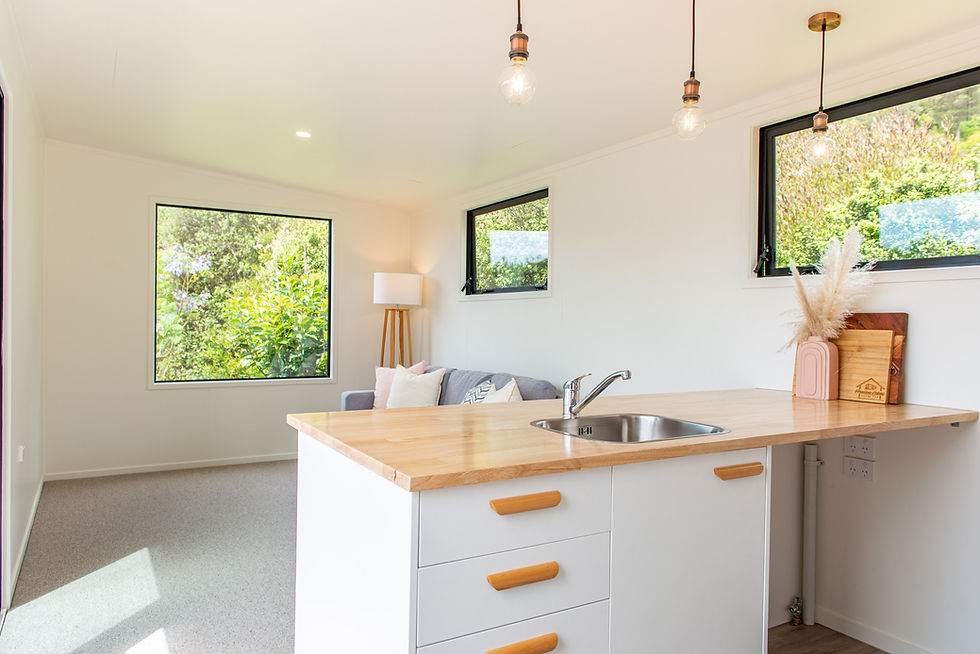
Christchurch sections are generally more generous, but earthquake repairs and zoning changes add complexity.
The Winners: Halswell, Rolleston, Lincoln, Hornby
Halswell & Rolleston (Southwest)
Why it works:
Large modern sections (800-1200m²), flat terrain, newer infrastructure post-earthquake rebuild, growing population needing accommodation.
Average section size: 900-1100m² Typical cabin placement: Rear of section with plenty of space Watch out for: Some developments have covenants - always check
Lincoln & West Melton
Why it works:
Semi-rural lifestyle blocks meeting urban amenities, massive sections (1000m²+), perfect for granny flats with space and privacy.
Average section size: 1000-2000m² Typical cabin placement: Wherever you like - heaps of space Watch out for: Check if you're on town water/sewerage or need septic
Hornby & Wigram
Why it works:
Established suburbs with good section sizes, affordable land, strong working-class community, flat sections.
Average section size: 700-900m² Typical cabin placement: Rear or side of section Watch out for: Some older homes have aging infrastructure that might need upgrading
The Tricky Ones: Fendalton, Merivale, Cashmere
Fendalton & Merivale
The challenge:
Premium suburbs with character protections, established trees, smaller villa-style sections.
Can it work? Only if you've got 800m²+ and council blessing. Expect more scrutiny.
Cashmere & Sumner Hills
The challenge:
Slopes, slopes, slopes. Beautiful views but expensive earthworks.
Can it work? Budget significantly more for foundations and site preparation.
Quick Section Checklist: Before You Commit
Walk your section (or a property you're considering buying) with this checklist:



Measure It
Pace out where the cabin would go
Check distance from all boundaries (you need 1m+ typically)
Make sure there's vehicle access for delivery
Look at Services
Where's the power meter? Can you trench to the cabin location?
Where's the water main? How far to the cabin site?
Is there sewer access or will you need septic?
Check the Slope
Can you comfortably walk across the proposed site?
Will water drain away from the cabin naturally?
Do you see signs of poor drainage (boggy areas, standing water)?
Consult Council
Pull a LIM report to check zoning and restrictions
Ask about any upcoming plan changes
Check if there are heritage or character overlays
Think About Living
Will the cabin create privacy issues?
Is there enough sun for both dwellings?
How will you share outdoor space?
The Bottom Line: Pick Your Section Wisely
The best section for a granny flat isn't always the biggest or most expensive - it's the one that gives you straightforward access to services, reasonable terrain, and enough space to meet setback requirements without cramping either dwelling.
If you're buying a property specifically to add a granny flat, prioritize:
Section size (700m²+ ideal)
Flat or gentle slope
Residential zoning with no special restrictions
Established services nearby
If you're working with the section you've already got, we can help you figure out if it's viable and what your options look like.
Want us to assess your specific section?
Get in touch - we've done site assessments across hundreds of properties nationwide and can tell you pretty quickly if your section will work.
Related Reading:
Understanding the 2026 Consent-Free Granny Flat Rules
What Services Do You Need for a Granny Flat?
Council Setback Requirements Explained
Disclaimer: This article provides general guidance. Always consult with your local council and get a professional site assessment before committing to a granny flat project.


Comments